
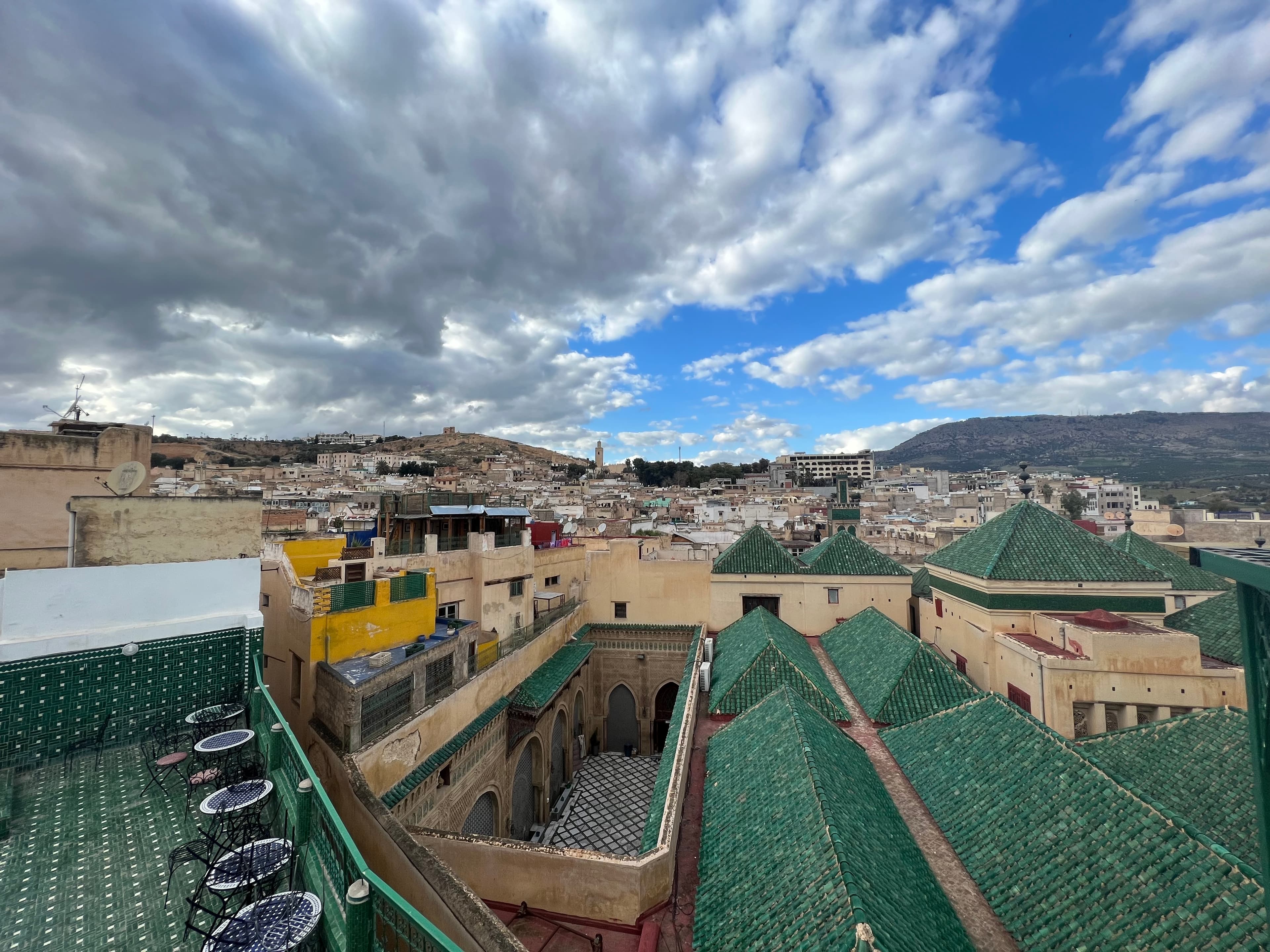
Fez is the oldest of Morocco's four imperial capitals and the most complete medieval city of the Arab world. The city captivates visitors through its sensory experiences — haunting sounds, intricate visual details, and distinctive aromas that have remained unchanged for centuries.
Approximately a quarter of its over one-million residents inhabit Fez el Bali (Old Fez), a medieval medina that has remained largely unchanged except for electricity and tourism influence.
Founding and Early Development
Moulay Idriss I founded Fez in 791 AD as a modest village. His son, Idriss II, transformed it into a significant city during the ninth century by welcoming refugees from Cordoba and Kairouan, who brought advanced craftsmanship and commercial expertise that accelerated its growth. The Kairaouine University emerged as an important intellectual centre during this period.
Medieval Period
Under Berber dynasties, governance shifted southward, but the Merenid conquest in 1248 restored Fez's prominence. The dynasty constructed Fez el Jedid (New Fez), and the city earned the reputation of "the Baghdad of the West" through continued immigration from Andalusia.
UNESCO World Heritage
Following the Merenids' fall, Fez gradually diminished under subsequent dynasties and colonial rule. UNESCO's 1981 World Heritage designation preserved the historic medina and recognised its unique cultural value to humanity.
Today, Fez el Bali remains the world's largest car-free urban zone and the planet's largest surviving medieval city — home to 9,400 winding alleyways, mosques, madrasas, souks, and the world's oldest university.