
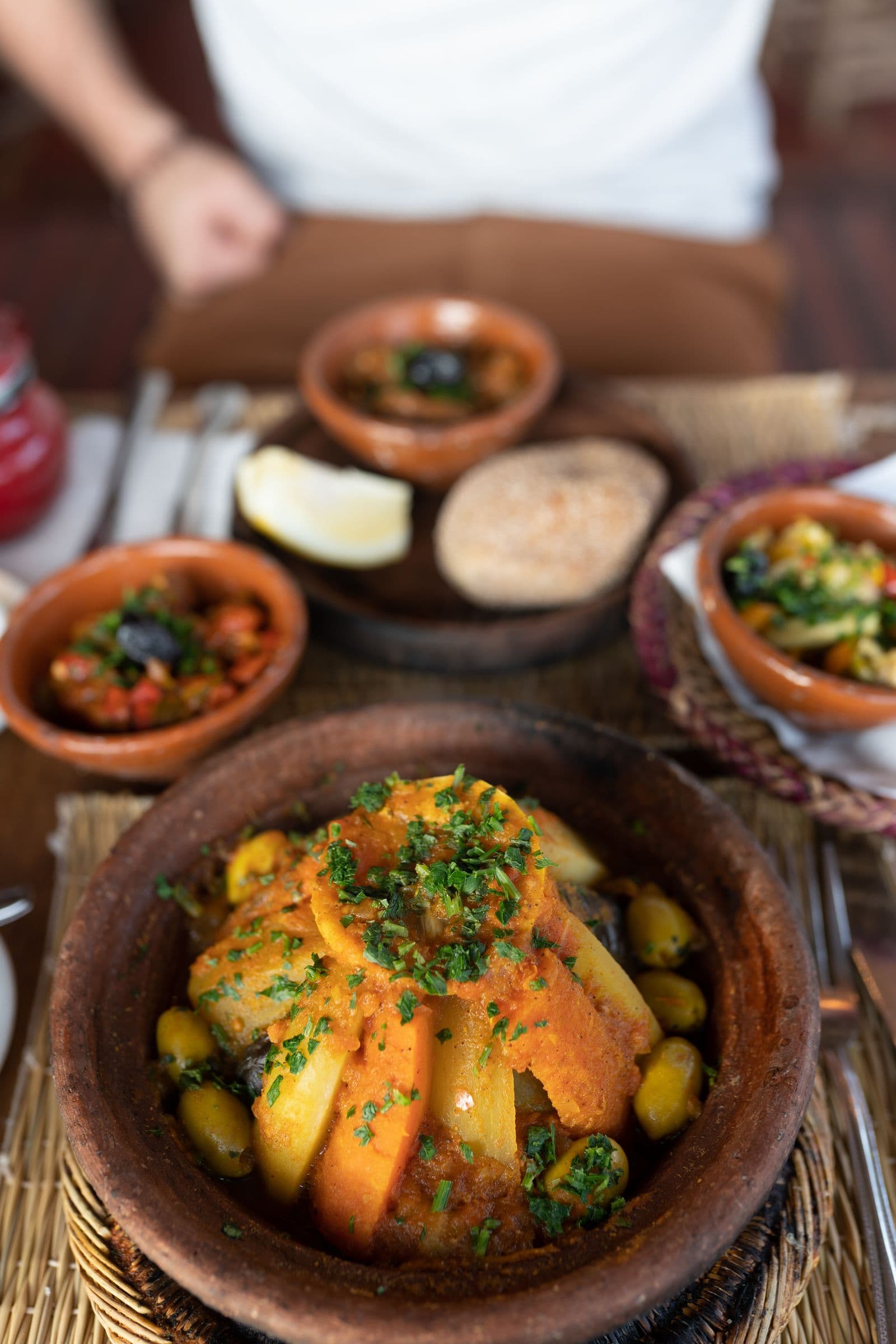
Fez has long been acknowledged as the culinary capital of Morocco, and Fassi cuisine is counted among the great regional cooking traditions of the world. The city's unique position as a crossroads of Arabic, Berber, Andalusian, and Mediterranean influence created a cuisine of extraordinary complexity and refinement.
The Influences
When Moorish refugees arrived from Andalusia following the fall of Granada in 1492, they brought with them centuries of refined culinary knowledge. Combined with Berber traditions, Arabic spicing, and Mediterranean ingredients, the result was a cuisine unlike any other — delicate, layered, and deeply sophisticated.
Iconic Dishes
The tajine — slow-cooked meat with preserved lemon, olives, and aromatic spices — is the dish most associated with Morocco, but Fassi cooking goes far beyond it. Bastilla (or pastilla) is perhaps the city's most celebrated creation: a layered pastry of pigeon or chicken, almonds, eggs, and cinnamon encased in paper-thin warka pastry, dusted with icing sugar and cinnamon. It is an extraordinary combination of sweet and savoury that surprises every first-time visitor.
Couscous, Harira and More
Couscous — hand-rolled semolina steamed over a broth of meat and vegetables — is traditionally served on Fridays. Harira, a thick soup of tomatoes, lentils, chickpeas, and lamb, is the dish that breaks the fast during Ramadan and is available year-round. Mechoui (slow-roasted lamb) and mrouzia (lamb with honey and almonds) complete a repertoire of remarkable depth.
Dining at Riad Fez Mahal
Our chef prepares authentic Fassi dishes using traditional methods and local ingredients. Breakfast is included with every stay — a generous spread of Moroccan breads, eggs, fresh juice, yoghurt, fruit, and mint tea. Lunch and dinner are available on request — simply inform us the evening before and we will prepare a memorable meal.