
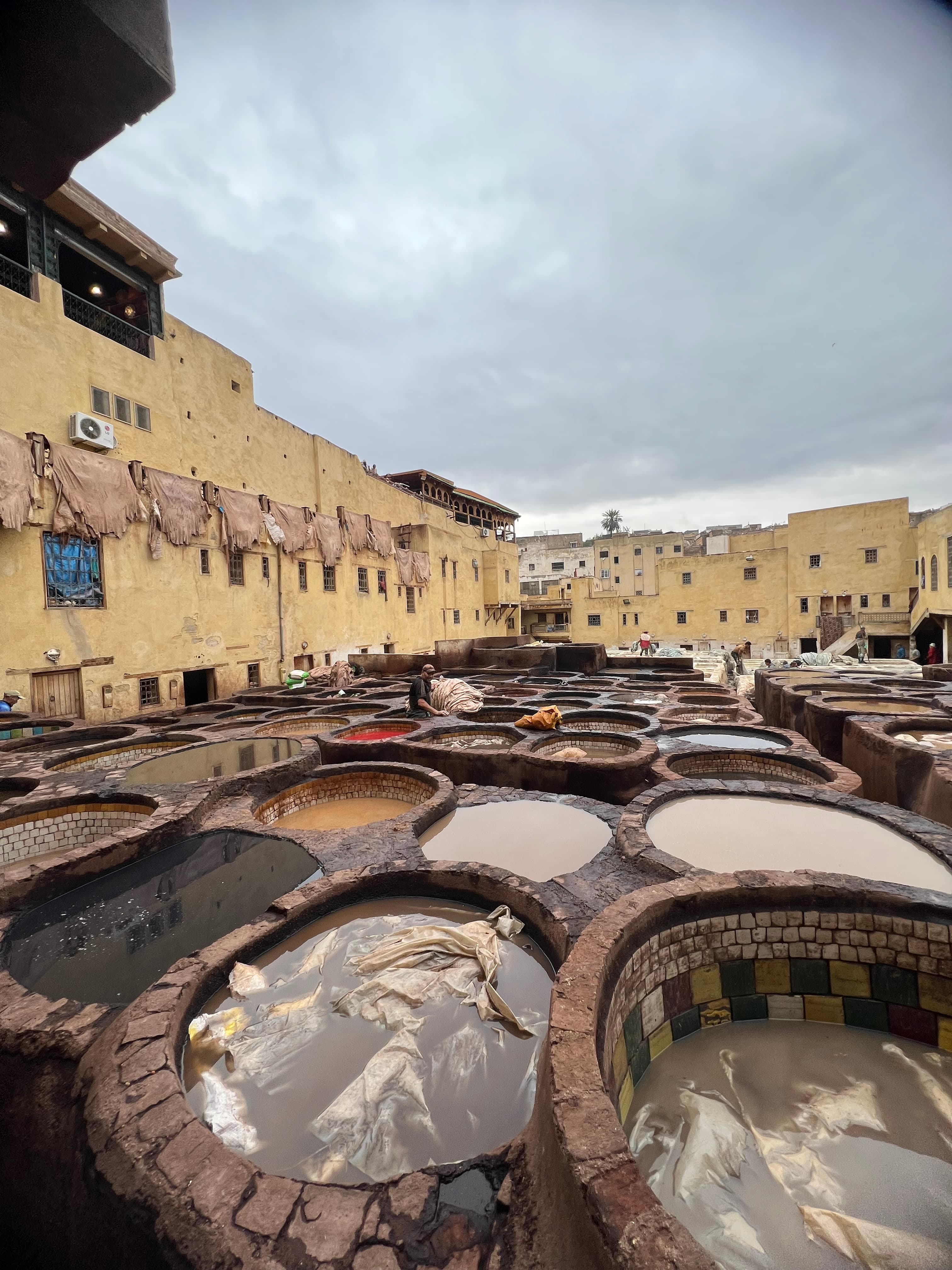
The souks of Fez are among the most extraordinary marketplaces on earth — a labyrinthine network of specialised streets where leather workers, weavers, coppersmiths, spice merchants, and ceramicists have each occupied their own quarter for centuries.
The Souk System
The medina's commercial structure dates back to the medieval era, when each trade was concentrated in its own district. The souks are not a random bazaar — they are a deliberately organised economy, with each street specialising in a single craft or product. Finding your way through them requires patience, curiosity, and the willingness to get lost.
What to Buy
Leather goods are Fez's most famous export — bags, belts, babouche slippers, and jackets made from the hides tanned at the Chouwara tanneries. Quality varies enormously; look for soft, supple leather with even stitching and be prepared to negotiate firmly.
Ceramics from Fez are recognisable by their distinctive blue and white designs — traditional geometric patterns derived from centuries of Islamic decorative art. Plates, bowls, tagine pots, and tiles make beautiful, practical souvenirs.
Carpets and rugs deserve particular attention. The medina contains several carpet merchants with stocks of both new and antique Berber and urban Fassi rugs. Allow time and don't be rushed.
Spices and Ingredients
The spice souk near Place Seffarine is one of the medina's sensory highlights — mountains of cumin, turmeric, ras el hanout blends, dried rose petals, argan oil, and preserved lemons. Everything is available loose by weight, and merchants are generally happy to explain uses and combinations.
Tips for Shopping
Negotiation is expected in most souks — the initial price is rarely the final price. Be polite, take your time, and don't feel pressured. A genuine smile and some basic Arabic courtesy (shukran for thank you, bghit — I want, lah for no thank you) go a long way.